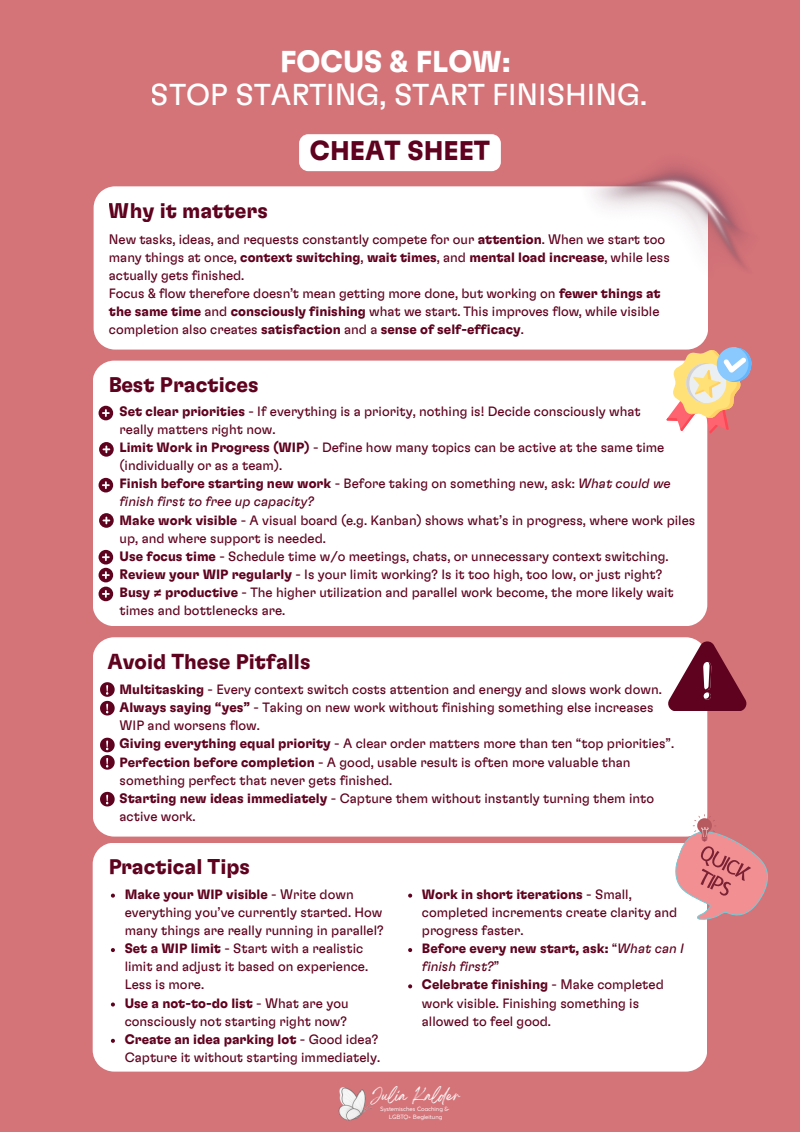
New tasks, ideas, and requests compete for our attention all day long. Starting them all feels productive — but every extra thing in progress adds context switching, wait times, and mental load, while less actually gets finished. Focus and flow aren’t about doing more; they’re about working on fewer things at the same time and consciously completing what you start.
The most effective lever is a WIP limit: decide, alone or as a team, how many topics may be active at once — and stick to it. Before taking on anything new, ask “What could we finish first to free up capacity?” Making the work visible on a board helps enormously here, because it shows where things pile up, where they wait, and where support is needed. High utilization looks efficient, but the busier and more parallel a system gets, the more wait times and bottlenecks it produces.
The usual traps are easy to spot once you know them: multitasking, saying yes to everything, treating ten things as “top priority,” polishing something to perfection instead of finishing it, and turning every new idea into active work immediately. Practical counter-moves: write down everything you’ve currently started, set a realistic WIP limit and adjust it with experience, keep a not-to-do list and an idea parking lot, work in short iterations — and celebrate completion. Finishing something is allowed to feel good.