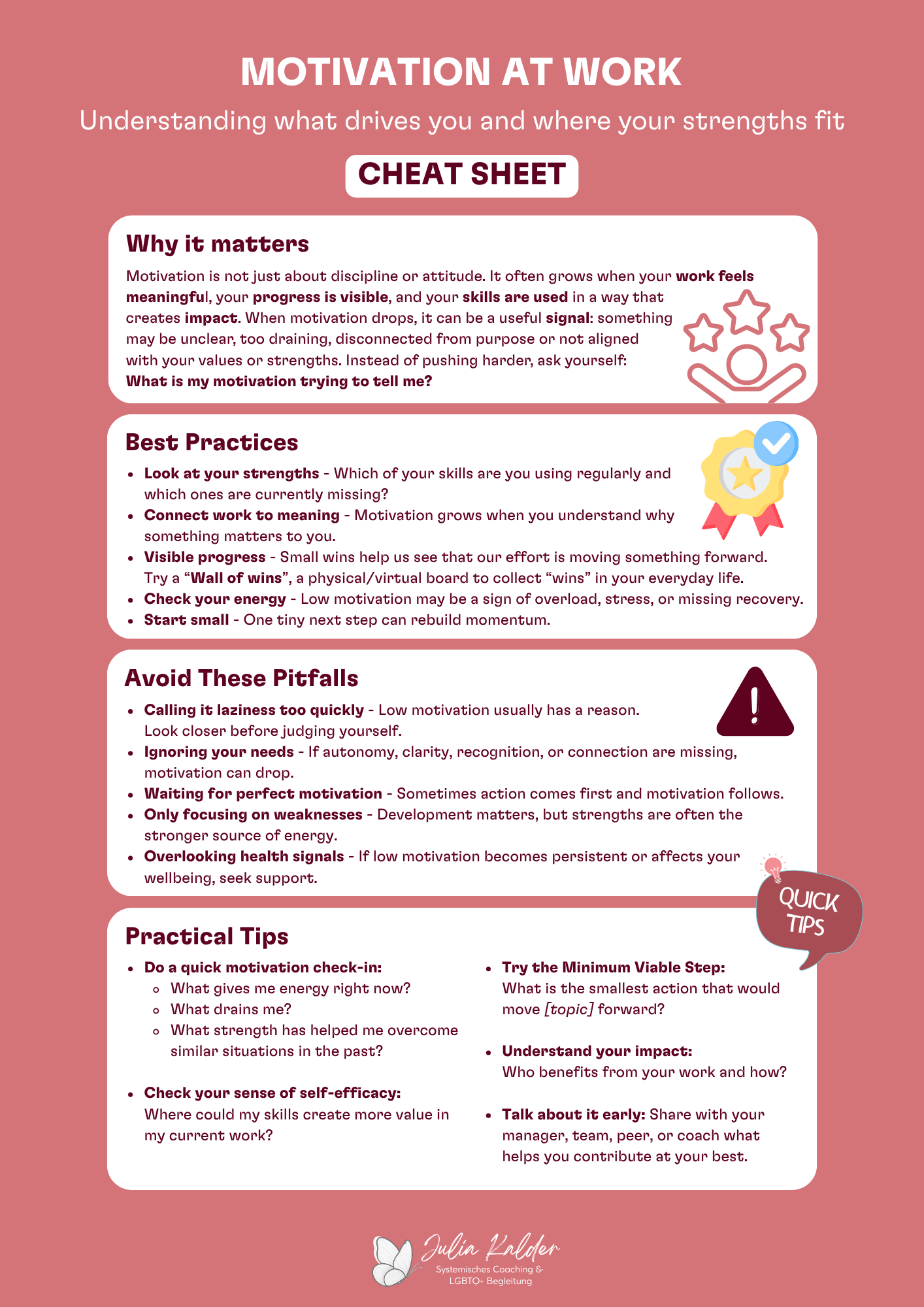
Motivation at work isn’t a fixed trait — it’s the result of conditions that can be understood and shaped. Decades of research point to three core drivers: autonomy (having a real say in how you work), competence (experiencing growth and mastery), and purpose (seeing why your work matters). When motivation drops, one of these needs is usually being starved — and no bonus or pep talk can compensate for that in the long run.
Progress is the most underrated motivator of all. Small, visible wins on meaningful work fuel engagement far more reliably than big incentives. That’s why practices like breaking work into achievable steps, making progress visible, and celebrating completed milestones have such an outsized effect — and why vague goals and constantly shifting priorities quietly drain a team’s energy.
Motivation also fluctuates, and that’s normal. Instead of blaming yourself or others for a dip, treat it as a signal: What changed? Less autonomy, unclear purpose, no visible progress? This cheat sheet helps you diagnose what’s driving — or blocking — motivation, and offers practical levers and habits to strengthen it, for yourself and for your team.