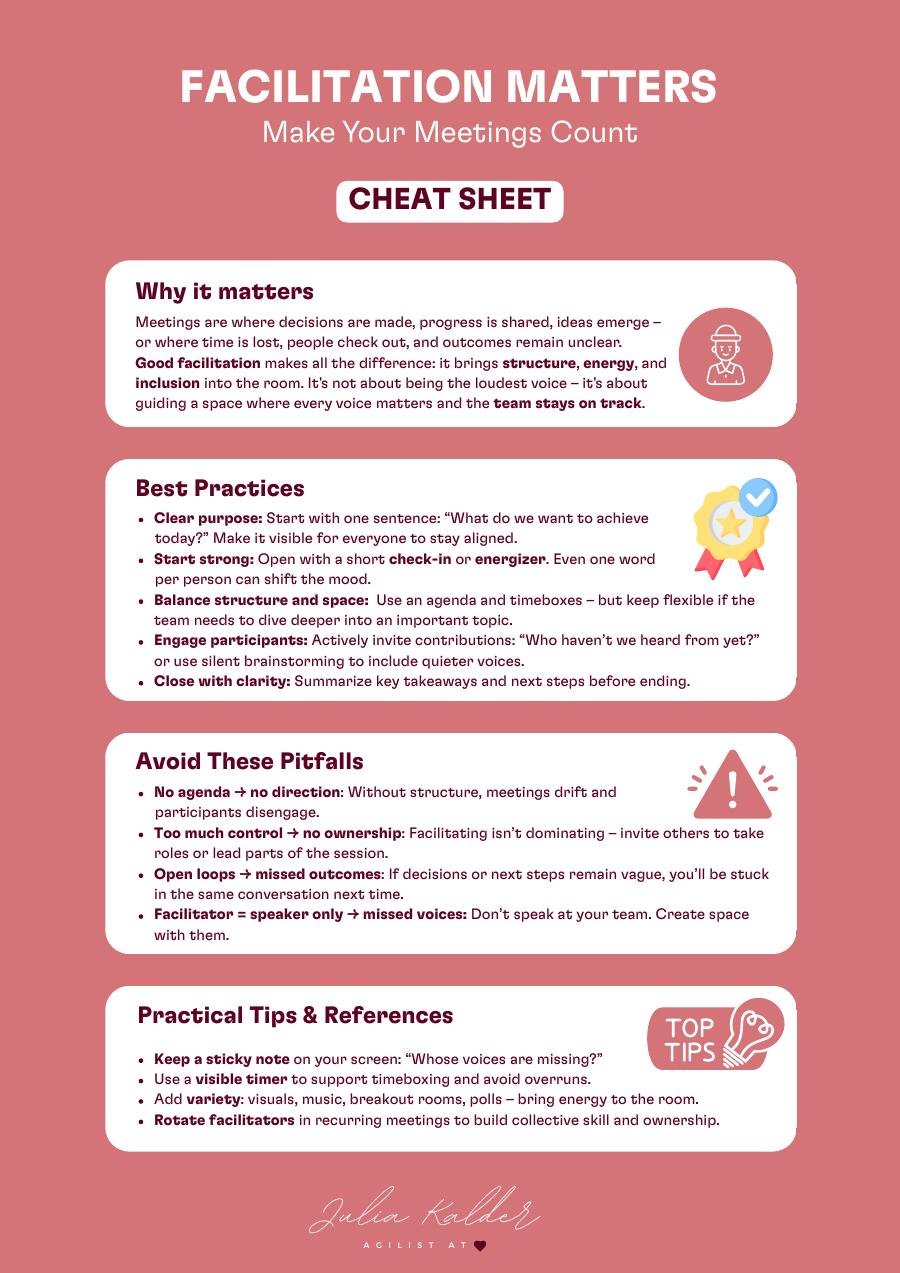
Bad meetings are one of the biggest drains on organizational energy — and most of them are bad because of poor facilitation, not because the topic doesn’t matter. Good facilitation turns a group of individuals into a thinking team, creating outcomes that no one could reach alone.
The facilitator’s job is to serve the process, not the content. That means designing clear agendas, managing time and energy, ensuring all voices are heard, and keeping the group focused on outcomes rather than spiraling into side discussions. It’s a skill that requires practice, not just good intentions.
Common pitfalls include letting the loudest person dominate, skipping the warm-up, trying to cover too many topics, and ending without clear next steps. This cheat sheet covers these anti-patterns and offers simple techniques to make every meeting more productive, inclusive, and worth people’s time.