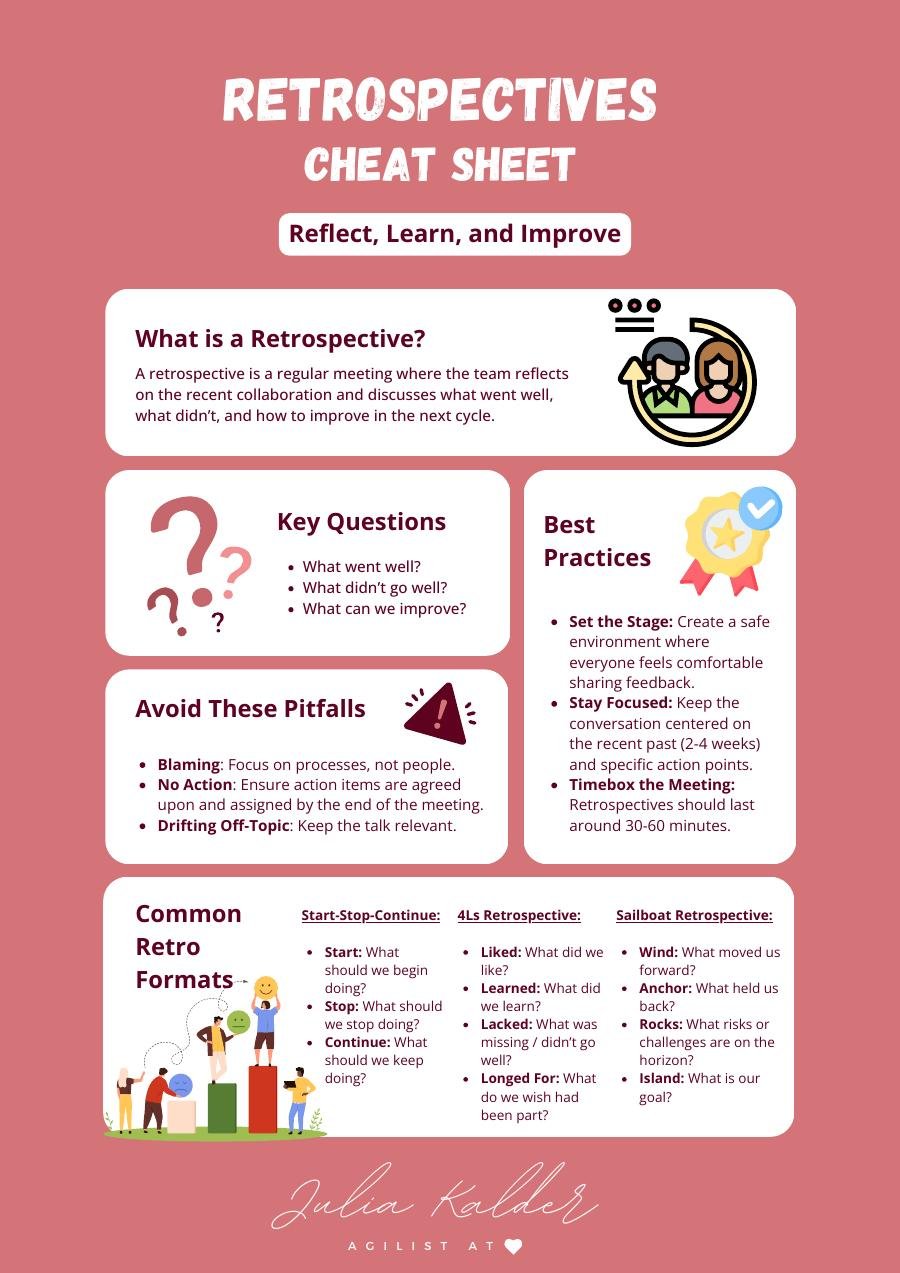
Retrospectives are the engine of continuous improvement. Without regular reflection, teams repeat the same mistakes and miss chances to grow. A well-run retro creates a safe space where honest conversation leads to real change — not just sticky notes that get forgotten.
The biggest anti-pattern is skipping the retro when things are “going fine.” Improvement doesn’t only happen when something breaks. High-performing teams use retrospectives to reinforce what’s working, spot emerging patterns, and adjust before small issues become big problems.
Variety matters too. If every retro uses the same format, people disengage. Try sailboat retros, timeline exercises, or “What surprised us?” prompts. The goal is honest reflection that leads to one or two concrete actions — not a laundry list no one follows up on.