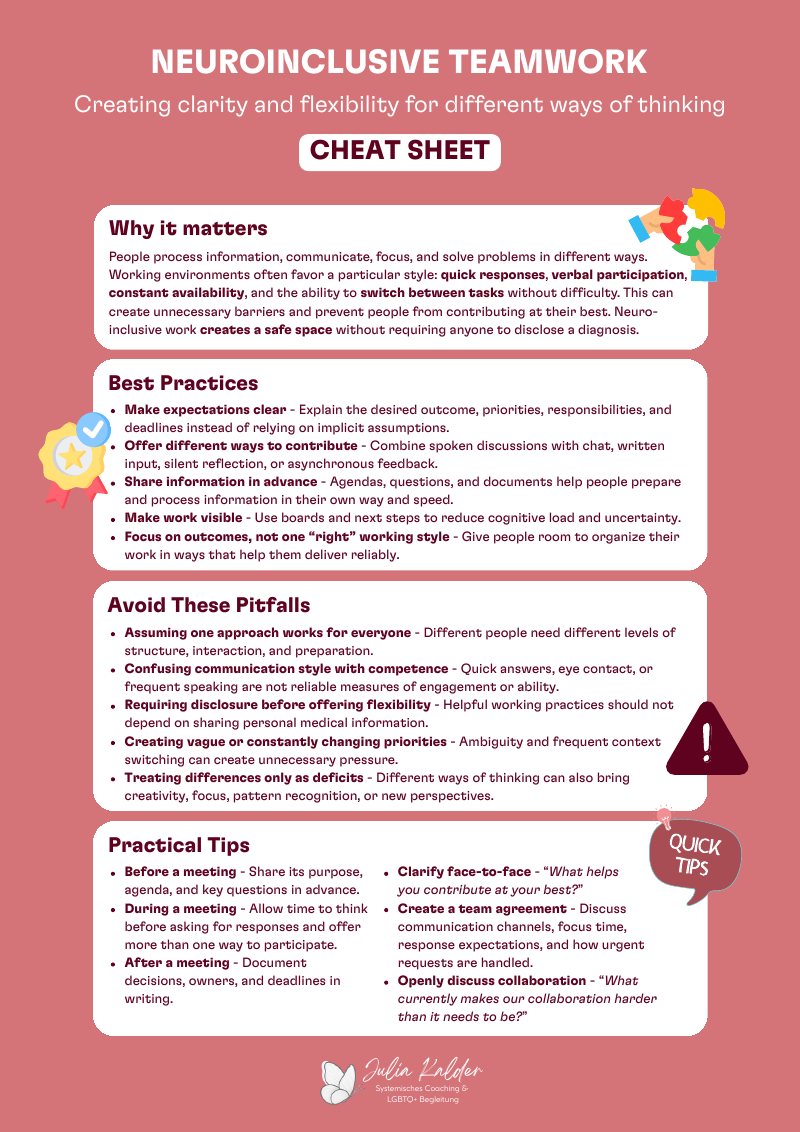
People process information, communicate, focus, and solve problems in very different ways. Yet many working environments quietly favor one particular style: quick responses, verbal participation, constant availability, and the ability to switch between tasks without difficulty. This creates unnecessary barriers and prevents people from contributing at their best. Neuroinclusive teamwork removes those barriers — and it creates a safe space without requiring anyone to disclose a diagnosis.
The good news: what helps neurodivergent colleagues helps everyone. Make expectations explicit instead of relying on implicit assumptions. Offer different ways to contribute — combine spoken discussion with chat, written input, silent reflection, or asynchronous feedback. Share agendas and documents in advance so people can prepare at their own pace. Make work visible with boards and clear next steps. And focus on outcomes rather than one “right” working style.
Watch out for the common pitfalls: assuming one approach works for everyone, confusing communication style with competence, or making helpful flexibility conditional on sharing personal medical information. Quick answers, eye contact, or frequent speaking are not reliable measures of engagement or ability — and different ways of thinking also bring creativity, focus, pattern recognition, and new perspectives. A simple team agreement about communication channels, focus time, and response expectations is often the best place to start.