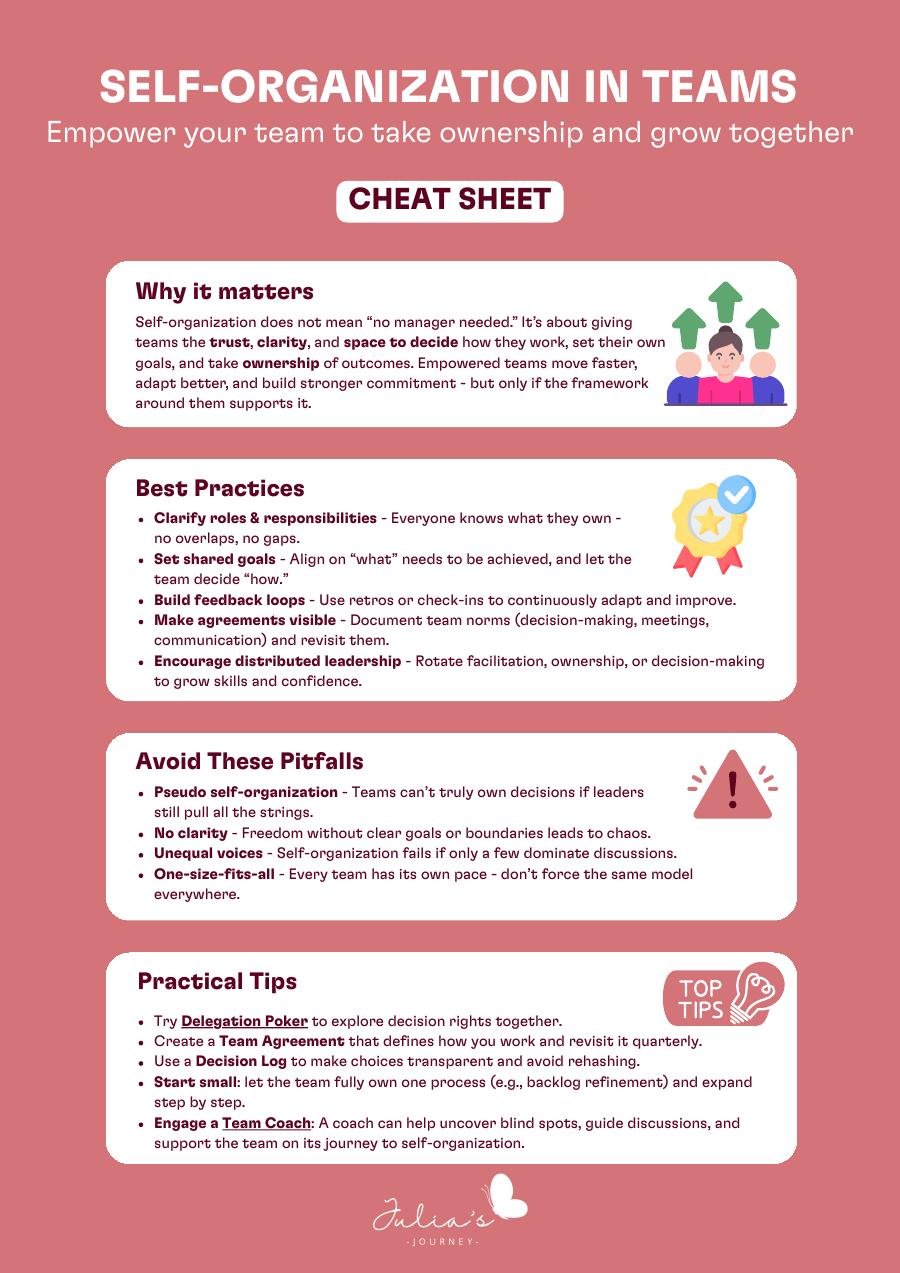
Self-organization is one of the most misunderstood concepts in agile. It doesn’t mean “no leadership” or “everyone decides everything.” It means the team has the autonomy to determine how they work, while leadership provides the vision, boundaries, and support they need to succeed.
The biggest anti-pattern is declaring self-organization without creating the conditions for it. Teams need clear goals, defined decision-making authority, access to information, and the psychological safety to experiment and fail. Without these foundations, “self-organization” becomes chaos dressed up in agile language.
Building genuine self-organization is a gradual process. Start by delegating decisions the team is ready for, make authority levels explicit, and resist the urge to jump back in when things get messy. The cheat sheet maps out common maturity stages and anti-patterns so you can diagnose where your team is and what they need next.